
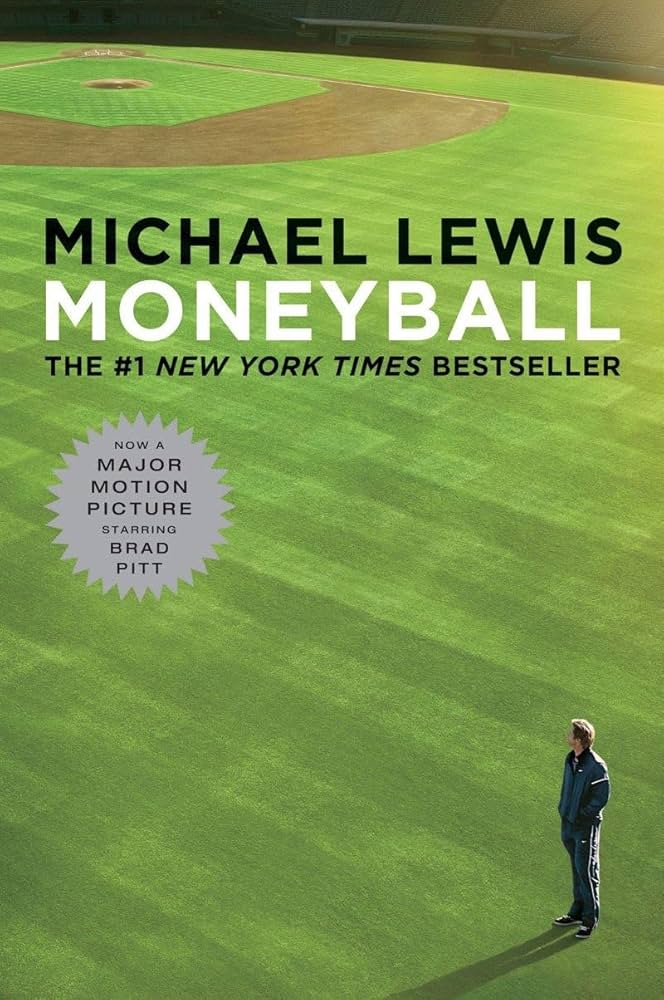
Every year, right before baseball season starts, I rewatch Moneyball. It’s become a tradition at this point—something about that mix of strategy, stubbornness, and slow-burn momentum gets me hyped for opening day. But this year, I finally picked up the book behind it all.
And I’ll be honest—this isn’t the kind of book I usually reach for. I don’t gravitate toward nonfiction about stats or economics, and I definitely wasn’t expecting to connect with something that breaks down sabermetrics. But Moneyball surprised me—in the best way.
It’s not just a sports book—it’s a story about what happens when you challenge the system. When you ask why things are done a certain way and whether they really work. It’s about the tension between tradition and truth, between what looks right and what is right.
But what really stuck with me were the players. The ones who didn’t look the part but proved they belonged—or at the very least, proved how wrong the system could be.
Jeremy Brown stood out the most. He didn’t fit the mold. People laughed at him, wrote him off, dismissed him before he even had a chance. But what he did do—reliably—was get on base. And that should’ve counted for more than it did. His story isn’t framed as some grand redemption arc. It’s quieter than that. But it’s powerful. Brown represented everything the old system ignored: substance over style, performance over projection.
Then there’s Chad Bradford. He didn’t pitch like other pitchers, and that alone made scouts uncomfortable. But he got outs. A lot of them. Quietly. Effectively. He wasn’t marketable. He wasn’t “normal.” But he was valuable. You just had to look past convention long enough to see it.
And Scott Hatteberg—who had to completely reinvent himself after an injury, learning a new position, starting from scratch, and becoming essential. That kind of adaptability? That kind of humility and hunger? That’s the kind of story that sticks with you.
The book makes you root for these guys not because they’re flashy, but because they were seen—finally. That’s the heart of Moneyball. It’s about the people who were told they didn’t measure up, who were valued only when someone was brave enough to change how value was measured.
Rating: ★★★★☆
I was surprised by how much I liked this book. Even if you don’t care about baseball, Moneyball is worth reading for what it says about second chances, quiet talent, and how to challenge the way things have always been done.
Have you read Moneyball or another book that reshaped how you see something familiar? Drop your recommendations or thoughts in the comments — especially if they involve underdogs.
Leave a Reply